
Most people don’t realize how crucial the right air filter is—until something goes wrong. Mismatched filters cause performance issues, returns, and frustration. I’ve seen this happen. But there’s a simple fix, and it starts with asking the right questions.
The right air filter ensures proper airflow, better engine performance, and fewer maintenance problems. You can find the correct one using your car’s VIN, filter specifications, or OEM part numbers.
Even seasoned professionals get caught up in filter selection errors. I once worked with a UK distributor who faced a surge in returns due to mismatched filters. We introduced a VIN-based lookup system. The results? A 30% drop in returns and far happier customers. Let’s walk through what makes this such a key decision.
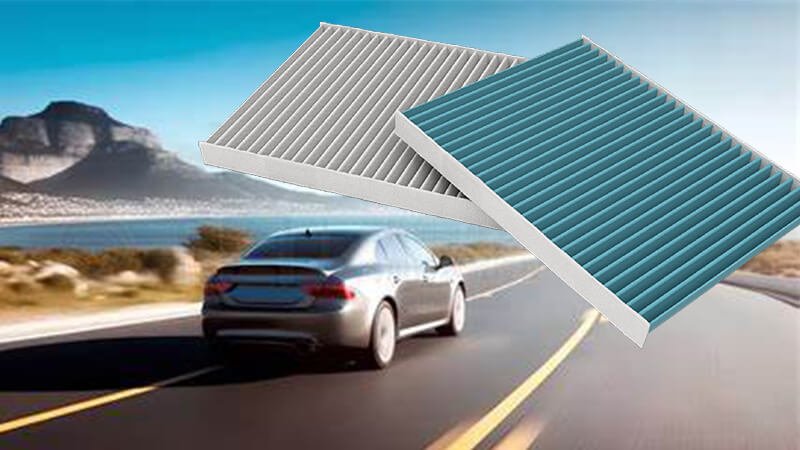
How do I know which air filter will fit my car?
It’s frustrating when the filter seems right—but doesn’t fit. The shape, size, and compatibility may look close enough, but close isn’t good enough. The wrong filter can let dirt in or choke airflow. Both are bad for the engine.
You can find the correct air filter for your car by checking the owner’s manual, using the VIN to match parts, or asking your supplier to cross-reference OEM part numbers.
Why shape and size aren’t everything
1. Tiny dimensional gaps harm sealing
A filter that is 2 mm short will rock in its housing. Dust slips past the seal. Over time, that grit will score cylinder walls.
2. Housing design changes across model years
A 2017 2.0‑liter engine may share space with a 2018 variant, yet the housing clips can move. I have replaced countless “almost fits” that rattled loose within weeks.
3. Turbocharged engines need stronger frames1
Higher intake pulses flex weak filter frames. A flimsy frame cracks and draws in unfiltered air.
| Spec that looks minor | Real‑world result if wrong | My rule of thumb |
|---|---|---|
| Height ±2 mm | Seal fails after 2 000 km | Accept ±0.5 mm |
| Pleat angle shift 5° | Airflow drops 6 % | Accept ±1° |
| Frame hardness Shore A 60 vs 70 | Frame warps at 90 °C | Ask lab sheet |
4. Use OEM numbers, not guesses2
I scan the part for the actual code—often hidden in the plastic. That single string saves hours.
5. Test fit before bulk order3
I always pop one sample into the housing, shut the lid, and check for rocking. A five‑second test beats a 500‑unit return.
Field story: the 2 mm lesson
I once supplied filters to a fleet workshop. They chose a cheaper part that was “close enough.” Three months later, dust buildup took out two MAF sensors. The cost of repair tripled the price difference. Precision matters.

How do I find what filter I need for my car?
Walking into a parts store or searching online can be overwhelming. There are dozens of air filters that all look alike. But only one truly fits your car and engine needs.
To find the right air filter, use your vehicle’s VIN, cross-reference with OEM part numbers, and always verify the dimensions and filter type (panel, round, or cone).
A repeatable five‑step search plan
Step 1: Decode the VIN
Every letter matters. The tenth digit gives the model year. The eighth often states engine code. I punch that into our Runex Auto catalog first.
Step 2: Confirm engine variant
Is it a 1.6 Turbo or a 1.6 NA? They use different housings. A quick hood check for an intercooler pipe clears doubt.
Step 3: Identify filter type
| Filter type | Common shape | Typical application | Key watch‑out |
|---|---|---|---|
| Panel | Rectangular | Most modern cars | Gasket height |
| Round | Cylindrical | Older carb models | Diameter match |
| Cone | Tapered | Performance kits | Neck ID size |
Step 4: Cross‑reference OEM and aftermarket numbers4
I keep a spreadsheet that links OE codes to our part numbers. When one code updates, I trace it through. This habit has saved me many late‑night calls.
Step 5: Check the environment
Cars in dusty areas need higher dust‑holding capacity5. I up‑spec the media to a heavier basis weight for those orders.
| VIN example | Engine | OE part number | Runex part | Notes |
|---|---|---|---|---|
| W0L0ZCF6961012345 | 2.0 TDI | 1K0129620E | RX‑AF‑VW‑020 | Needs water‑repellent media |
| SADCJ2FX4JA260999 | 2.5 Petrol | C2D36854 | RX‑AF‑JA‑025 | Conical; silicone seal |
Why databases beat memory
Before we set up a cloud lookup, I relied on memory. It worked—until a new trim level launched. Now, a quick VIN check6 pulls exact data, plus service interval. Errors went from weekly to almost nil.

How do I know which air filter to get?
Some buyers go for the cheapest option, thinking all filters are the same. That’s a mistake. The wrong filter can cause reduced fuel efficiency, poor acceleration, or even engine damage.
Choose an air filter that matches OEM standards, uses high-quality filter media, and has been performance-tested. Don’t pick based on price alone—reliability saves money long-term.
Digging into filter quality
1. Filtration efficiency7 vs. pressure drop
I run every new media through a lab rig. I record the grams of dust retained at a fixed flow and the kPa drop. We aim for ≥98 % efficiency with <2 kPa drop at 240 m³/h.
| Media type | Efficiency @ 5 µm | Pressure drop (kPa) | Service life (km) |
|---|---|---|---|
| Basic paper | 85 % | 1.5 | 5 000‑8 000 |
| Synthetic fiber | 98 % | 1.8 | 15 000‑20 000 |
| Oiled cotton | 95 % | 1.2 | Re‑oil every 5 000 |
2. Pleat count8 matters
More pleats = more surface. I count them. A panel filter under 50 pleats is usually cutting corners. Our standard VW panel holds 72 pleats.
3. Seal material and heat resistance9
Nitrile seals may harden at 120 °C. I prefer silicone for turbo engines that sit near 140 °C after peak runs.
4. Real‑world noise
Cheap filters can whistle. The cause is unsupported pleats fluttering. We bond the pleat tips to a mesh to stop that.
Personal test routine
I tap each new filter on a hard surface. A dull thud means dense media. A hollow ring suggests wide, weak pleats. Simple but effective.

Does it matter what air filter I get for my car?
Some people think all air filters are interchangeable. But the truth is—what goes into your engine affects everything: from fuel economy to wear and tear. You wouldn’t wear the wrong-sized shoes every day. Why do that to your car?
Yes, it matters. Using the wrong air filter can reduce engine performance, increase fuel usage, and shorten engine life. Only filters that match your car’s specs protect the engine properly.
Counting the real cost of a bad filter
Engine damage timeline
Week 1: extra dust scratches the throttle body.
Week 4: MAF sensor10 drifts, ECU adds more fuel.
Month 6: piston rings score, compression drops.
Fuel penalty math
A 3 % airflow loss forces the ECU to enrich by 3 %. On a car that burns 8 L/100 km, that is 0.24 L extra every 100 km. Drive 20 000 km a year—that’s 48 L of fuel gone.
| Cost item | Cheap filter | Correct filter | Notes |
|---|---|---|---|
| Purchase price | $5 | $12 | One‑time |
| Added fuel/year | $80 | $0 | At $1.67/L |
| MAF sensor replacement | $120 | $0 | Every 2‑3 years |
| Engine overhaul risk | High | Low | $1 500+ |
| Warranty claims (dealer) | 5 % units | <1 % units | My client data |
Emissions fail risk
An enriched mixture lifts CO beyond test limits. One taxi fleet we studied had 18 % fail rate on annual inspection with budget filters. Switch to OEM‑spec, fail rate fell to 3 %.
Peace of mind
I like opening an air box after 15 000 km and seeing clean pleats. It tells me everything inside the engine is still healthy.

Conclusion
Finding the correct air filter11 is more than matching shapes. It’s about protecting engines, improving performance, and keeping customers happy. By using VIN-based lookup tools, choosing high-quality materials, and sticking to OEM specs, we avoid costly mistakes. At Runex Auto, I’ve helped distributors cut return rates, save on fuel, and strengthen their brands. A precise filter choice today prevents expensive repairs tomorrow. And that, in my eyes, is the smartest path to reliable mobility.
-
Understanding the requirements for turbocharged engine filter frames can help ensure optimal performance and prevent costly repairs. ↩
-
Using OEM numbers ensures compatibility and reliability, saving time and money in the long run. ↩
-
Learning the best practices for test fitting can prevent costly mistakes and ensure the right fit for your needs. ↩
-
Exploring OEM and aftermarket numbers helps you understand parts compatibility and quality, crucial for vehicle maintenance. ↩
-
Learning about dust-holding capacity can improve your filter selection process, ensuring better performance in various environments. ↩
-
Understanding VIN checks can enhance your knowledge of vehicle history and specifications, ensuring informed decisions. ↩
-
Understanding filtration efficiency is crucial for selecting the right air filter for optimal performance and air quality. ↩
-
Exploring pleat count can help you understand its impact on filter efficiency and longevity, ensuring better air filtration. ↩
-
Learning about seal materials can guide you in choosing filters that withstand high temperatures, enhancing durability and performance. ↩
-
Understanding the role of the MAF sensor can help you appreciate its importance in maintaining engine efficiency and performance. ↩
-
Find the best auto air fitler from Runex auto, clicking this link to get your best price and air filter. ↩