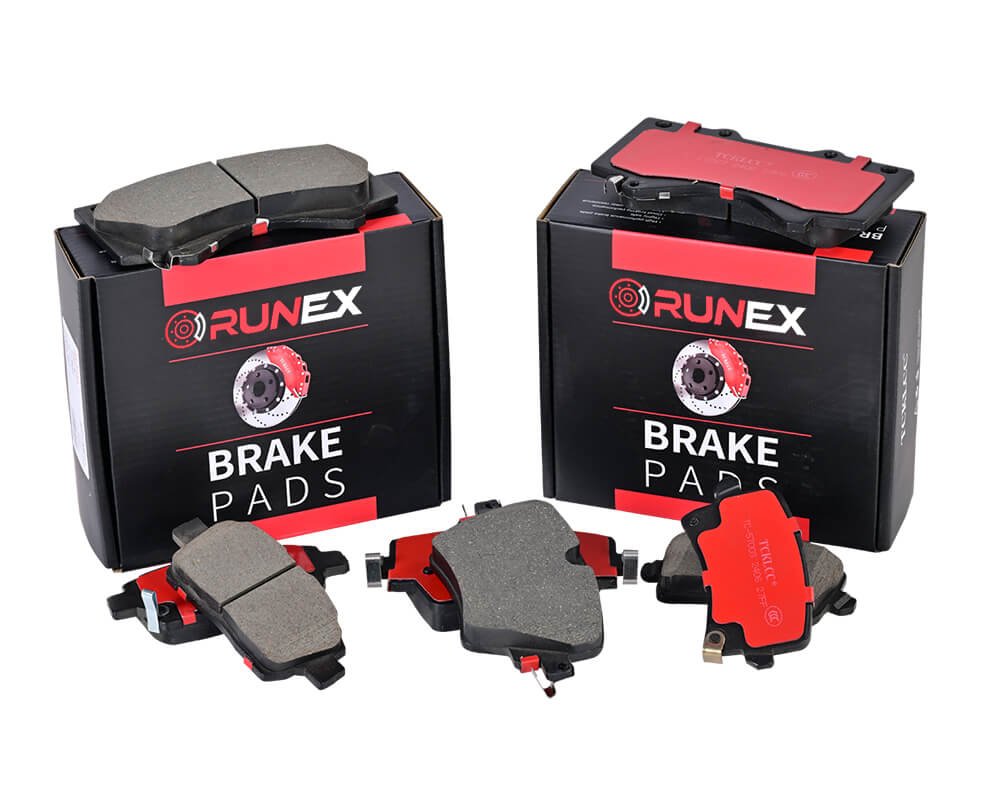

I feel a tight knot in my stomach when a buyer tells me a fresh pad set made the wheel dance. The thought of a car that shakes under brake pressure keeps any fleet owner awake at night.
Yes. New brake pads can shake the wheel when the rest of the brake system stays old, dirty, or out of spec. Pads only stop a car when every surface meets flat and true.
A simple pad swap looks fast on paper, yet one missed detail—an uneven rotor, a rusty hub, or a bolt set too tight—can turn confidence into complaint. I write this to keep that complaint off your desk.

Can new brake pads cause vibration?
The promise of smooth stops drives buyers to order premium pads, but the first drive may send a buzz up the steering column. That buzz feels like failure and shakes brand value.
Yes. A new pad can trigger vibration when it mates with an old rotor face, slides in a sticky caliper, or fights a wheel that sits off-center. The pad is innocent on its own; the system decides the feel.
How the pad and rotor first meet
When a fresh pad touches a rotor it tries to copy the rotor’s exact topography. Any high spot or run-out turns the copy into a wobble.
| Rotor Issue | Field Symptom | Quick Check | Straight Fix |
|---|---|---|---|
| Parallelism spread > 0.03 mm1 | Pedal pulses at low speed | Micrometer eight-point read | Resurface or change rotor |
| Run-out > 0.05 mm | Wheel shakes at 60 km/h | Dial gauge at outer face | Clean hub, true rotor, retest |
| Heat spots | Blue rings on rotor face | Visual after road test | Machine rotor, then bed pads |
I once traced a light van’s shake to a heat spot band 20 mm wide. The driver braked hard down a hill five times during break-in. The pad resin smeared, stuck, and left a high-grip ring. We cut the rotor by 0.15 mm and repeated the bed cycle; the wheel ran dead straight.
Installation errors that hide in plain sight
| Error | Cause in shop | Field result | What to teach |
|---|---|---|---|
| Over-torqued nuts2 | Impact wrench, no torque stick | Rotor hat bends | Use a torque wrench, star pattern |
| Grease on pad back | Over-greasing anti-squeal shim | Pad slips, grabs | Thin film only on shim edge |
| Missing hardware kit | Re-using old clips | Pad drags on slide | Always fit new clips, low-temp grease |
A small hardware kit costs less than one return call. I send extra kits with bulk pad orders so mechanics never choose reuse to save minutes.
Environment and driving style
Cold morning stops3, wet roads, or mountain descents push the rotor and pad into extreme cycles. Pads with high metal content heat faster; ceramic blends shed heat slower but resist fade.
| Compound | Friction Code | Heat Rise per 10 Stops | Fade at 400 °C |
|---|---|---|---|
| Low-Met NAO | FF | 55 °C | Medium |
| Semi-Metallic | GG | 75 °C | Low |
| Ceramic | FF | 45 °C | Medium–Low |
Knowing the mix lets you pick a pad that fits route and load, trimming vibration risk before the wheels roll.

How to fix brake judder after new pads?
Judder shakes trust. Worse, it drains warranty budgets and delays fleet loops. Yet the cure sits in a short, repeatable checklist.
Fix judder by restoring flat, clean, and true contact surfaces, setting bolts to spec, freeing the caliper, and repeating the bed-in cycle. Each step costs minutes. A returned batch costs months.
The Clean-Mate Routine in practice
I teach every partner my five-step Clean-Mate Routine4. It fits on one service card. Mechanics clip it to the lift post.
1. Verify rotor thickness and parallelism
Use a ball-end micrometer at eight clock points.
| Spread | Action | Note |
|---|---|---|
| ≤ 0.03 mm | Rotor OK | Light scuff pass optional |
| 0.031–0.05 mm | Light machine pass | Both sides, keep vent depth |
| > 0.05 mm | Replace rotor | Mark rotor “scrap” to avoid reuse |
2. Scrub the hub face
Rust rings as thin as paint lift the rotor by 0.02 mm. A drill wire brush cleans in 30 s, yet many shops skip it. I ask them to lay a straightedge on the hub after cleaning; light must stay even all around.
3. Hand torque the wheel
I keep a laminated chart of common car torque specs5 inside every pad box.
| Vehicle Class | Lug Torque (N·m) | Pattern |
|---|---|---|
| Small car | 95 | 5-lug star |
| Sedan | 110 | 5-lug star |
| SUV | 130 | 6-lug star |
| Light truck | 160 | 6-lug star |
4. Bed the pads with care
I drive ten gentle 60 → 20 km/h stops, then two firm 90 → 20 km/h stops. I let the brakes cool for ten minutes in motion with no pedal. This sets an even transfer film.
5. Free the caliper slides and piston boots
A frozen slide pin defeats every step above. I remove the pin, polish rust with fine emery, and apply silicone grease rated above 250 °C. If the boot cracks or swells, I replace it.
Fleets that follow Clean-Mate report under 2 % brake complaints6 in the first 20 000 km, compared with over 10 % before. The numbers speak louder than promises.

Why does my car shake when I brake after changing brakes?
The driver blames the last part fitted. Yet the brake job touches half the wheel end, and any piece can upset balance.
A car shakes after a brake job when one element—hub, bearing, rotor, tire, or suspension—stays out of line. The pad gets the blame because it is new, but the root often hides elsewhere.
Layered fault search
I solve shake calls with a top-down flow that checks the cheapest fix first.
| Layer | Quick Test | Budget Fix | Typical Time |
|---|---|---|---|
| Wheel balance7 | On-car spin balancer | Add weights | 10 min |
| Tire run-out | Dial gauge on tread | Rotate tire on rim | 15 min |
| Hub run-out | Dial gauge on rotor | Clean hub, retorque | 15 min |
| Bearing play | Rock at 12–6 o’clock | Replace bearing | 1 h |
| Suspension joint | Pry bar feel | Replace joint | 1–2 h |
I once solved a repeat shake on a city taxi line by swapping tires front to rear. The tread carried river wear from mis-alignment, and the pattern buzz mimicked rotor pulse. A simple cross-rotation blocked a third warranty claim.
Suspension influence
Worn control arm bushings let the rotor plane shift under load. Imagine clamping a record in a loose spindle; the tone arm jumps. I use a simple pry bar test: if the arm moves more than 2 mm at the bushing while loaded, it needs change. This step turns many “brake” jobs into true cures.
Heat distribution analysis
I use a handheld IR camera8 after a 70 → 0 km/h stop. Even brakes show less than 15 °C spread side to side. A hot wheel marks a dragging pad; a cool wheel signals under-effort. The image below (placeholder) helps workshops grasp the hidden heat story.

Why do my brakes feel weird after new brake pads?
“Feel weird” is a broad phrase that covers soft, grabby, spongy, or delayed bite. The driver knows the old pedal by muscle memory, so any change stands out.
Brakes feel odd in the first 100 km because the pad has not seated, the caliper has reset, and the compound may differ from the old set. The odd feel should fade; if it grows, inspect again.
Stages and remedies in detail
| Kilometers After Fit | Normal Feel | Warning Feel | Remedy |
|---|---|---|---|
| 0–10 | Slightly long pedal, low bite | Pedal sinks, no bite | Bleed system, check leaks |
| 10–100 | Bite rises, brief smell | Steering pull | Check caliper slide motion |
| 100–500 | Stable pedal, no smell | Pulse or squeal | Inspect rotor run-out, pad edge bevel |
| > 500 | Smooth, silent | Any new noise | Full wheel-end strip |
Compound change effects
A driver who moves from an NAO pad to a semi-metallic9 one will feel sharper initial bite. It is like switching from hiking boots to running shoes; response tightens. I mark the box with a simple friction curve graphic. Buyers show this to their customers so the new feel does not surprise them.
| Compound Swap | Expected Change in Bite | Expected Change in Dust |
|---|---|---|
| NAO → Semi-Metallic | +10 % | +5 % |
| Semi-Metallic → Ceramic | −5 % | −20 % |
| NAO → Ceramic | −8 % | −25 % |
Hydraulic reset
Compressing the piston pushes brake fluid back up the line. In some ABS units tiny air pockets shift. A pressure bleed at 1 bar clears them. I include a bleed instruction card with bulk pad orders—the card pays for itself in calls avoided.
Caliper alignment
A mis-centered caliper tilts the pad. I measure pad edge wear after 200 km. If one edge loses more than 0.5 mm compared with the other, I loosen the two guide bolts, center the bracket with thin shims, and retorque.
Conclusion
New brake pads 10 can shake, pulse, or feel strange when the wider brake system stays out of line. The cures are simple: restore flat rotor faces, clean every mating surface, torque by hand, free the caliper, and guide the pad through a calm bed-in. I turn each step into a checklist so my buyers ship confidence, not complaints. That keeps faith with our promise: Promoting Quality, Delivering Confidence.
-
Understanding parallelism spread can help you diagnose brake issues effectively and ensure safety on the road. ↩
-
Learning about over-torqued nuts can prevent costly damage and improve brake performance in your vehicle. ↩
-
Exploring the impact of cold weather on brakes can enhance your driving safety and maintenance practices. ↩
-
Explore this resource to understand the Clean-Mate Routine, which can significantly reduce brake complaints and improve vehicle safety. ↩
-
Learn about essential torque specifications for different vehicle classes to ensure proper wheel installation and safety. ↩
-
Discover effective strategies to minimize brake complaints, ensuring better performance and safety for your fleet. ↩
-
Understanding wheel balance techniques can enhance your repair skills and improve vehicle performance. ↩
-
Discover how IR cameras can reveal hidden issues in brake systems, enhancing diagnostic accuracy. ↩
-
Explore the advantages of semi-metallic brake pads, including improved bite and performance, to enhance your driving experience. ↩
-
Know all things about Runex Auto Brake Pads, clicking this link to get your best prodcut for your business. ↩